Friday, 22 March 2013

Tremendous Tassie


When last we left our unlikely heroes, they were torn between going to work on a farm and travelling around the Apple Isle some more.  How did they get out of this sticky situation?  To find out stay tuned for this week’s thrilling episode of “Into the Good Life”!

What do you think happened, of course we kept travelling!  We wanted to see what Tasmania had on offer that we hadn’t got around to seeing yet.  Just for the sake of research of course, so we could tell future visitors our honest opinion on planned Tassie itineraries and make useful suggestions.
Cor on the South Cape


So in pretty short order we went to southernmost point of Tasmania at Cockles Creek and walked an overnight to South Cape Bay.  We were rewarded with an echidna snuffling by the trail, some brilliant geological formations and some amazing views south towards Antarctica.  Though again I disturbed TWO tiger snakes, screamed like a girl, hitched up my skirts and legged it, leaving poor Cor trailing in my wake.  Really have to do something about that reaction, it’s getting embarrassing….. but it DID hiss at me!
Our echidna!!

We popped by the Hastings Caves down there as well, very interesting caves, saw a cave cricket, glow worms, a type of cave spider and by the trail outside, two lyrebirds and a platypus paddling away in the creek, bold as brass.  Awesome ornithoryncus anatinus scenes.
Just a tiny bit of the awesome geology on the South Cape coast
We then opened up the throttle on Chuck the truck, heading up to Strahan on the west coast (rainy!) via St Claire Lake (on the south end of the overland track – crowded!), then up to Wynyard and Stanley in the north, and across to Arthur River in the west.

We went for a cruise on the Arthur River up in the Tarkine wilderness.  You may have heard about this as being a bit of a contentious area in relation to planned mining of iron ore in this area.  Some of the people in Arthur River were odd to say the least.  I had a difference of opinion with one of the tour people on the boat.  Credit to him, he was doing a job trying to keep the mystery of the Tarkine wilderness alive by saying that Tasmanian tigers could still be in this pristine wild area, citing unconfirmed sightings in the 70’s.  My thought is that it is this very thinking that allows people to shuffle off responsibility for the man-made extinction of the tigers, right when the Tasmanian devil faces a not-too-dissimilar fate.  Even if there were some tigers left, the same guy then argued AGAINST World Heritage listing for the area.  He suggested that World Heritage status for the Tarkine would stop the locals up at Arthur Creek from “going where they want and doing what they want” and that is why the majority were against it.  To hear one of these locals talking about driving along in a boat shooting cormorants for fun gives you an idea of what he means.  They don’t tell anyone when they find Aboriginal sites, as any outside interest may interfere with (their ideas of) personal freedom.

We then got to experience the opposite personality type in Geoff of Kings Run Wilderness Tours.  Geoff’s family used to run cattle along the coastal heathland near the Tarkine, but when he found it tough going he was a willing audience for a biologist friend who told him he had something special in his section of coastline, and more importantly, there were people who were willing to pay to experience it.  Geoff picks you up in his ute, driving you to a deserted beach shack with a slightly incongruous 3 metre wide double glazed window in the side.  After walking about the beach for a bit Geoff takes us for a walk around the area, showing us the middens left by the original Manegin Aboriginal people, their tool-making areas, places where they hunted seals and their hut depressions.  His property has just been accepted for World Heritage status, and this has allowed him to stop 4wd access to the beach where these sites are, earning him the vitriol of locals who would like to 4wd and ride four-wheelers all over the place.  You can see old tracks nearly running right over 900 year old fur seal hunting pits.  Despite this you can see his pride in being able to share this special place with people.
Kings Run on the West Coast

Around dusk we adjourn to the fishing shack, Geoff breaks out the wine and nibblies and turns on the baby monitor.  You see, just outside that incongruous window, is some roadkill staked to the ground with a light on it and a baby monitor hidden in the grass nearby.  After an hour Geoff hears a noise, and after getting ourselves settled in our seats (with wine in hand of course), turns out the lights in the hut and opens the curtains.  There he is, a beat-up looking Tasmanian devil proceeding to go to town on the possum carcass out there.  We sit and watch this guy munch away, gradually getting fatter and fatter.  He looked like he had already eaten, and was just topping up, but it was great.   We watch this guy for about an hour, before he scarpers and shortly thereafter another male turns up, a bit bigger but with more white on his body.  After an hour of furious demolition the devil manages to get the carcass off the stake and scarpers with it, running straight into another devil out in the dark and proceeding to have a bit of a set to.  That was our cue to go, so we jumped in the back of the truck and spotlighted some animals on the way to the gate.  It really couldn’t have been a better conclusion to the evening, or to one of the best experiences we have had in Tasmania.
Oh you devil!
After Arthur River we trucked across the country, and spent a couple of nights around Launceston, catching up with some people my sister Elisa introduced us to, Kate and Amy.  These two have been travelling and working around Tasmania for a few months and had some great stories to tell, and some great advice too.  Check out their blog at www.wrightemery.wordpress.com.
The world's largest motorboat at the Cherry Shed

We now find ourselves in the Bay of Fires in the north east.  We are going to do some walking and camp overnight out there tomorrow, with a view to making our way back down to Hobart and start WWoOFing next week (if someone will have us).

I promise to be more regular with this blogging thing, the only problem has been that despite supposedly having Australia’s fastest internet with the National Broadband Network, no bloody place we stay is actually connected to it!  Plus the fact that this travel shit keeps you pretty busy.

Palya peeps!
On a clear day you can see Antartica (no, not really)

Sunday, 10 March 2013

I could live like this. Wait a minute, I am!


Palya!

What. An. Inspiration.  Joel Salatin’s course was an intriguing mix of motivational speaking and useful facts, all designed to make you want to jump out of your chair and start farming not tomorrow, or even later today, but in the next 10 minutes.  Joel gave us the benefit of over 40 years of experimentation and observation over the course of 3 days, and it was brilliant.

I know people tend to see what they want, but in Joel I saw the true son of an accountant.  He can give you the cost of every chicken, half of beef, leg of pork or egg leaving his farm.  He puts a price on his time and can quote you exactly how much time he puts into every part of his farm, and knows where the “leaks” are.  He can tell you what store-bought lumber costs, and how much he saves by cutting his own.  It was an impressive thing to watch.

But more than that, he gave us the belief that we can be profitable as a farming venture.  You see, we didn’t really believe, it.  Not deep down.  Instead I have been carrying around lots of baggage from my history, all those years talking to farmers whose kids don’t want to farm, who say there is no money in it.  The most I was hoping for was to not have to do too much “off farm work” to keep us afloat.  But Joel convinced us that with a scientific business approach and by embracing niche polyculture (instead of industrial monoculture) we could not only be profitable, but with hard work we could earn white-collar salaries.  It is not often you hear that from a farmer!

The other interesting thing about Joel’s approach is that it is management intensive.  He is a meticulous observer and recorder of information, but he is doing stuff like moving all his chickens and cows once a day.  Most farmers would have cardiac arrest at the thought of an intensive approach like that, but in his course he showed how it works.

The other key thing we learned is that we may need to be located a little closer to town than we first imagined.  To utilise the benefits of a direct-marketing approach like Joel’s we should be within half an hour of a town with at least 25,000 people.  There aren’t many of these in Tassie!  This puts the mockers on my dreams of a remote paradise, but we will search for somewhere that walks the line between solitude and saleability.

So what we learned in that 3 days was immense.  I can’t even begin to sum it up, but our greatest gain was certainly motivation and inspiration.

The beautiful Kiama, south of Sydney, where the course was held.

Since the course we spent some time with my sister and my niece, who seems to get cuter by the day, before hitting Melbourne for the ferry over to Tasmania.  Fortunately for me, the ride was as smooth as a veal cutlet.
We have now spent the last couple weeks travelling about Tasmania.  We have been hanging with Todd, a fellow diver we met in Chu’uk (Truk Lagoon) and another friend.  We were doing some touristy stuff before beginning the WWOOFing and farm hunt in earnest.

See?  She just keeps getting cuter (but appears to be dumbfounded here!)
We visited the Museum of Old And New Art (MONA) and it was, well, I guess the word is interesting?  There was some stuff I liked, some stuff I hated, and I certainly in parts I felt like my entry fee was supporting the lifestyles of some seriously twisted individuals.  The Lark Distillery in Hobart was more my style, with some excellent single malts being produced there, and a useful source for anyone in Tassie looking for the more obscure Scottish drams unavailable elsewhere.

We also hiked the Organ Pipes trail on Mt Wellington, and checked out the great views over Hobart.  I recommend it to anyone visiting the city.
Todd checking out the organ pipes on Mt Wellington
Following this we visited Port Arthur, home of the notorious convict settlement and the tragic 1996 massacre.  It was a great day and a really fascinating insight into an aspect of Australian history that I didn’t know a heck of a lot about.  The conditions that the prisoners’ and the soldiers faced were incredibly tough, and the sentences for those sent here even tougher.  We spent a day here but it could have been two and we still wouldn’t have scratched the surface of the experience.
The old church at the atmospheric Port Arthur
After our history lesson we went in search of more nature and so we hiked to Cape Raoul south of Port Arthur.  It was a fantastic walk that we took nice and slow over the course of 6 hours.  There were myriad beautiful outlooks over cliffs and the southern ocean.  At the end of the cape there were amazing dolorite columns jutting out above the sea, with a colony of elephant seals at the bottom.  These columns were similar to the “organ pipes” up on Mount Wellington, but on a much grander scale with the waves coming up from the Antarctic to crash into them.  On the walk back we saw a couple of black tiger snakes on the trail, getting some sun late on a cool day.  It was pretty freaky for me as someone who hates the snakes but useful practice in managing my phobia.  We also saw a pademelon (think wallaby-possum hybrid cuteness), which was kind enough to hang out for Todd for a couple of photos.
Cape Raoul, with Todd atop the dororite columns.
After relocating ourselves up to the Freycinet peninsular on the east coast of Tasmania, we went to check out some of the little/fairy/blue penguins coming ashore and breeding.  They were really cool little guys, and it is amazing to think of each of them bombing around the southern ocean on their own, coming ashore occasionally.  They have had a stonking breeding season with the warmer water experienced this year, with some pairs having two clutches of chicks over the course of the summer.  Fluffy scenes.

We spent a day paddling sea kayaks around Coles Bay, finding a secluded little section of beach to pull up the kayaks, have lunch and play a little Frisbee.  Life really doesn’t get much better than a glassy day, a kayak, your own beach, a little lunch and then (after getting back) a scallop pie and a Cooper’s Pale Ale in the sun.  True heaven.

I think Cor said it best:  “I could live like this.  Wait a minute - I am!”
Paddling paradise!
The siren call of the Freycinet peninsula and Wineglass Bay led to an interesting decision to do a couple of nights hiking and camping out in the wilderness.  I say interesting because the most that Todd had ever travelled from a car to camp was 200 yards, but he didn’t mention this to us and we proceeded to undertake an ambitious 6-hour hike into Cook’s Bay on the peninsula, carrying 3 days’ worth of food.  By the time we got there he was most relieved to be off his feet and into the ice-cool waters of the bay.
Cook's Bay
That night commenced the first instalment of “the Possum Wars”.  Unfortunately some idiots have been feeding the wildlife down in Freycinet on account of these critters being so cute.  The downside of this is apparent at 2 am when one discovers a possum sitting on your backpack inside the tent vestibule, having eaten its way through the lid and one of the shoulder straps in its search for food.

The Possum Wars culminated at Wineglass Bay on the second night with Todd standing under a tree at 3 am futilely throwing sticks at a possum in the upper branches.  In his words: “That possum took my sunglasses!”  I had to tell him that I had in fact moved his sunglasses earlier in the night in my own instalment of the Possum Wars revolving around the location of our rubbish bag.  Cue much hysterical laughter by all except old man Emmons who still wanted to shake his fist at the treed possum.

Possum wars notwithstanding, we did have some close encounters with Bennett’s wallabies, and the views that greeted us every morning from our tents were sensational.  All agreed it was a very special place.
Good morning!
Hanging with the locals.

So now after many kilometres, 5 dozen fresh oysters, 3 kg of mussels, 1 kg of scallops, countless scallop pies (really!), tonnes of cheese, a bottle of gin and lots of beers, the Salamanca markets, 4 separate hikes, some sea kayaking, and just a little Star Wars geek talk (does anyone else know what an IG-88 droid looks like?  Todd does) we have waved goodbye to our travel companions and are making our way forward on our own.  We may continue to do the touristy Tasmania, or we may jump into the WWOOFing.  Either way we will keep you all posted!

Palya!
And beware giant car-wrecking kangaroos!

Tuesday, 12 February 2013

Back to school!


Palya folks!  How is it going?

Sorry for the lapse in posting, it has been such a whirlwind month, it has been a little hard to know where to start!

Since we last posted our plans we have had lots of support from our friends, and we have been hard at work trying to expand our knowledge before heading out and buying a farm.  This has entailed talking to lots of people, an appearance on community radio, reading lots of books, plus a stint volunteering on a small-scale farm to get some experience.

The main thing we have learned is that we are almost unique.  Most people buy a place, with all its problems and issues, and then try to figure out how to fix it.  We are trying to find out what we should be looking for, and what pitfalls to avoid, before we buy, as opposed to after.  This is not to say we will be able to avoid the problems, but we are trying to go in with our eyes as open to these as possible.
Eyes open, something like this.
So in this learning process we have learned a little something about permaculture.  When my sister went off to Costa Rica to start her “Permaculture Design Course”, I must confess I thought permaculture was some hippy-dippy word for what is essentially organic farming, with some grey-water recycling and straw bale house building thrown in for the smelly dreadlock crowd.  I have to apologise to her and the dreadlocked, because after doing our homework we have realised that permaculture covers a whole lot more, and doesn’t just apply to the tree-hugger set.  It is a system set up around a good yield/diversity/energy equation, among (many) other things.  For me its essence is lazy farming, building a holistic system to produce the best output for a given input of energy.

Now some perma-heads will disagree with my analysis, but I have only just started this journey, and that is my beginner’s interpretation.
Norman here was born the day before we left our volunteer farm.
So to give other budding treechangers/perma-beginners/suburban escapists a feel for the path that our learning is taking, so far we have read:
- Permaculture 1 by Bill Mollison & David Holmgren – good intro to the concepts, though 30 years old;
- Permaculture 2 by Bill Mollison – good expansion of some concepts, particularly structures;
- The Chook Book (1st edition) by Jackie French – good no-nonsense book, 2nd edition looks expanded and even more useful with photos and more illustrations;
- Natural Cattle Care by Pat Coleby – brilliant book, good ideas, and a great help with our first experience dealing with cattle while we were volunteering;
- Going Bush by Edward Mundie – a little disappointing, a couple of vital lessons and some useful tips but too dated to have just been written in 1994, ignores efficient systems;
- The Permaculture Handbook by Peter Bane – just started reading this, American based so not sure how useful it will prove in Tassie, but the principles are there.

I have the Permaculture Design Manual by David Holmgren to read, and Cor is halfway through Backyard Self-sufficiency by Jackie French, whose informal writing style is a joy to read.

At the moment we are at my sister’s place before starting a 3-day course this weekend at Milkwood Permaculture up near Sydney.  The course is called “You Can Farm” by Joel Salatin and should give us an opportunity to ask some practical questions of someone who is working daily with the principles that interest us.  Joel has appeared on shows like 'Food Inc' and in the bestselling book, Omnivore’s Dilemma.

Then we are heading to Tasmania on 25th February, to do some more volunteering on farms via the WWoOF system as we begin to look for a place to buy.  A word of warning on WWoOFing - it appears to have become less about the "willing" workers on "organic farms" and more of a way for backpackers to see Australia on the cheap.  Not that there is anything wrong with this, but be prepared to find yourself in hostel-style-accommodation renovating the owner's house if you don't do your homework.

We will be crossing on the ferry with our new dual cab Ranger “Chuck” and a friend we met diving in Micronesia for a bit of road trip fun in Tassie before starting to work.  Not looking forward to the crossing – apparently it can be a bit bouncy!

If you are interested in hearing more about our motivations and what we want to achieve, check out the podcast of our radio interview here: http://podcast.3cr.org.au/pod/3CRCast-2013-01-29-61152.mp3.  We aim to do a regular bit with Jonathan on this program to keep folks updated on our progress.  Our goal with this will be to show people that if even a couple of putzes like us can make a go of a big change in their lives, then they can too!

Thanks going out to Jonathan and Jane, Barbara, Fleur, Anna and Dave, and of course my sister Elisa and her family for putting up with us whenever we are in northern Victoria.

Stay tuned!

Wednesday, 9 January 2013

The Crazy Plan


I hope everyone had great Christmas and New Years’ celebrations, and that now you are excited about what 2013 holds!  Every day is precious, make the most of it.

OK, now something that has been on my mind for a while (forgive the word-heavy post!).  I know we have set up this blog ostensibly as a place to talk about our journey to find our own corner of the world to grow our own food, and we haven't really been talking about it here.  But that doesn't mean that we aren't thinking about it.  And I mean a lot!

Plus, we haven't really told many people what we are planning to do.  Why?  Mainly because they will almost certainly think we are crazy for chucking a couple of well-paid 9 to 5 careers in for this madcap notion of growing our own food with any “real” work fitting in around this.  But then the people who read this blog have read the "why" in my Meaning of Life post earlier in 2012, so now I am going to put some of our ideas out there.

Here is the crazy plan:
1.  Buy a property with the qualities listed below.
2.  Get cracking growing our own food, focusing on heritage and heirloom varieties for a focus on the best taste (we are all about great-tasting food).
3.  Year one - chickens, a couple of weaner pigs and my personal challenge: bees.  Have a crack at making cider/perries with our first fruit harvest.  Start a farmer's market stall selling any surplus produce we don't barter away.
4.  Year two - a goat for milk, another couple of pigs, plus a beef steer.  Mead-making anyone?
5.  Year three - ducks, a sow that we will use for breeding, with a couple of pigs, another beef steer, and some lambs.
6.  Year four - sheep, and perhaps a heifer for milk and breeding (depending on how we go with the goat!)
7.  Year five - commence farmstay.  Actually we may start this sooner as we get going and need extra hands but growing enough food will be the focus.

We will supplement our food as much as we can with whatever we can get for free from nature - fish, venison, rabbit, duck, goose etc.

It is a very rough plan at the moment, and we have no idea whether we have enough cash to actually last that long, or whether we can make enough at farmer's markets to pay the bills that are inevitably going to arrive.  As an accountant I would do a budget, but I have no notion as to what things are going to cost, so it won't be that useful!

So, what do we want in a property?  We have quite a list worked up, and each point has been the result of much discussion.

In no particular order we want:
- lots of space.  We don't want to be able to see our neighbours and we need enough land to grow our fruit and vegies plus enough pasture for animals.

- a mix of native bush and pasture.  We want to have some bush that is suited for camping and generally giving the native fauna a place to live.

- our own water supply.  We know that water is precious, so a creek and a dam or two, or maybe a spring, would be ideal to ensure we can keep our garden growing and putting food on the table.

- established orchard.  It takes a long time to get fruit trees up to full productivity so an apple and pear orchard, with other fruit trees, already established, is a must.

- north-facing block.  Plants like sun.  We like sun.  Enough said.  Oh, and keep in mind we are talking the southern hemisphere here people!

- a house, of no particular quality.  We would like to build our own house.  I have a lot of ideas in mind for a very energy-efficient house that is incredibly cheap to run and is very self-sustaining.  But before we can build it we need somewhere to live, and we will also need a house or cottage for the farmstay business component of our plan.

- outbuildings.  No real rocket science to this one, if there is already a chicken coop that is one less thing for us to build, plus we will need somewhere for the vehicles.

- in the right area.  This should really be number one.  We need a place that is in an area where people are either doing something similar or have experience at doing it.  We don't want to reinvent the wheel, we want to use other people's knowledge as best as we can on our journey and also not try to do everything.  Why try to get into making goat's cheese if the family down the road are making award-winning stuff that they are happy to trade for some pork products?  Plus we need an outlet for surplus produce.  We need a town with a farmer's market or something similar within reasonable distance to allow us to shift all those things that you suddenly have a glut of. And we can't be an excessive distance from an airport.  When we progress to the aforementioned stage two this will be more important.

- reduced chance of bushfires.  We aren't spending years building a place and a business up to support us and then having it go up in smoke in 30 minutes and have to start from scratch when we are older and less able to do the hard physical labour.  This may be hard but we will be looking for properties with plans in place to manage this risk.

So that is it, pretty demanding I know but we can trade a few things about, and we will probably end up adding to this list.

I don't know where in here we would have time for anything like building a house, but we will see how it pans out.  We know that we are not really going to get vacations in the first few years, hence the massive trip now, but we have a few ideas for how we can get holidays once things are ticking along and I'll flesh these out in another post.

So what do you think?  Are we crazy?  What would you suggest we change or plan differently?  Would you pay to come stay on our farm and eat our quality food, and maybe help out around the farm if you feel so inclined?

Friday, 21 December 2012

Dive! Dive! Dive!


Hi friends!

When last I posted we had cracked our camera and were pretty down about it.  To focus on just this however would do a disservice to the excellent diving we thoroughly enjoyed in Palau, Yap and Truk (or Chu’uk).

For those who aren't into researching dive locations, these form three of the four states of the Federated States of Micronesia, to the north of Papua New Guinea and to the east of the Philippines.  All are home to diverse diving experiences.

Palau is famous for strong currents, some interesting cavern dives and generally lots of life in the form of schooling sharks plus manta rays and pelagic fish such as tuna, marlin and sailfish.

Yap is home to a number of manta ray "cleaning stations", areas of reef where large numbers of mantas, some as large as 5 metres across, come to have parasites cleaned off them by reef fish.

And finally, Truk lagoon in Chu'uk is the site of a famous US bombing operation in WWII, Operation Hailstone, which sank in excess of 50 Japanese ships plus a number of planes.  These ships make for interesting and challenging wreck dives showcasing everything from boxes of beer bottles to guns, torpedoes, tanks, trucks, planes and even a John Deere tractor.

We visited Palau first, and had a great 7 days diving a wide range of sites.  We used reef hooks to hold ourselves onto the reef while grey reef sharks schooled in front of us over the deep drop-offs, and we drifted over massive coral reefs populated with giant clams and patrolled by schools of giant bumphead parrotfish, swimming along in a cloud of their own crap like prehistoric cows.  We also had curious Napoleon wrasse getting up close and personal, an interesting experience with such a large fish!  We saw a few manta rays, and watching these giant rays at play was a great experience we would soon be getting much more of at Yap.

The caverns were spectacular, holes in the top of the reef that you drop into at 2 metres, to emerge on a coral covered wall 30 metres down.  The light inside them was truly ethereal.  Our last dive into Chandelier cave allowed us to surface into a series of stalactite-covered caverns complete with trapped air that allowed us to take out our regulators and have a chat before descending once more.  Though we were cautioned not to fart as it would stay in there for every visitor to come after us!  Very tempting..... but I was good, I promise!

In Yap we stayed at the dedicated dive resort of Manta Ray Bay.  We didn't see any mantas at our first visit to the cleaning station, but as the week progressed we saw more and more, culminating on our last day with a 90 minute dive with up to 8 manta rays, some of whom formed a "mating train".  The less I say about this the better! The other diving there was quite varied, a mix of deep drop vertical walls with pelagic fish and beautiful coral gardens with some of the tiny life we have grown to love since our time with Scuba Junkie in Malaysia. One night on dusk we did a dive to watch mandarinfish come out to mate.  These little fish shuffle around amongst the coral and are normally quite bashful during the day, but on dusk males convince a series of females to join them for a quick dash out of the coral and a bit of a "quickie".  Let's just say the expectations incumbent on these males are a long way short of what are expected of a modern human male.

We did spend a part of the week nervously watching category 4 Hurricane Bopha pass to the south of Yap, our concerns somewhat assuaged by the consumption of the Yap "Stone Money" micro-brew beer.

Which brings an interlude from dive talk: Stone money (the real thing, not the beer) is a pretty neat invention of the Yapese (though the beer is still bloody good too).  These giant stone wheels were quarried over at Palau, and then transported by canoe at much peril back to Yap where no such stone was available.  The value of each piece of stone money is the subject of discussion between both parties and takes into consideration the age of the piece and the difficulty of obtaining it from Palau.  As a result when an Irishman turned up with some stone money that he had quarried and transported using modern techniques, these pieces did not have as much value as the traditional money.  Given that it can take up to 20 guys to shift some of these monstrosities they don't often move, but are still used for some transactions such as property dealings and a record of their ownership kept.

Leaving the land of stone money, we flew to Chu'uk, the land of the world's worst roads.  Never again will I complain about London roads or some bumpy Australian highway.  We joined our liveaboard dive boat, the Odyssey, not really knowing what to expect except for wrecks wrecks and wrecks.  What we got was deep, dark and dirty wreck diving, interspersed with wrecks that have been colonised by soft coral and turned into underwater wonderlands. 

Coreen couldn't enjoy it for long however, because on day two she felt an acute pain and perforated her eardrum.  This unfortunately ruled her out from any further diving, but despite this she maintained her usual sunny disposition and dedicated her time to becoming what was acclaimed as the best tech team on the boat, setting up the camera and assiduously checking it prior to every dive.  I couldn't have handled a disappointment like this with the equanimity she showed, and she reminded me why we are such a good team - she is the sensible one!

Then on day three, disaster struck the Odyssey.

Firstly, on the first dive of the day, at a wreck named the Hoki Maru, I experienced a bad case of nitrogen narcosis.  At depths in excess of 30 metres nitrogen can affect the brain like a drug, with a whole range of factors contributing to the nature of the narcosis.  After penetrating and then exiting the hold of the wreck at 37 metres, my narcosis took the form of a panic attack, my vision closing in and hyperventilated breathing.  I had to grab hold of myself and tell myself that if I didn't calm down, I was going to die.  I decreased my depth until the symptoms abated somewhat, and then aborted the dive, very shaken from the experience.  Having never had such issues at depth before, it was a severe knock to my confidence.  Talking about it with more experienced divers afterwards, they related similar experiences brought about by some unspoken anxiety prior to the dive.  Not having Coreen with me as my usual buddy, and then having the camera fail on my entry to the ship's hold (you can't tell it's a full SD card when the screen is black!), may have been contributing factors to the nature of my narcosis, but I will never really know for sure.

Then, after being back on the boat for some time, we discovered that a diver had gone missing from his group during the dive, and had died while diving in the wreck.  Based on post-analysis, what likely happened is that Rob's group thought he had aborted the dive due to ear equalisation issues, and the other group that he followed into the depths of the wreck were unaware that he was following them and was lost.  He was found at 50 metres in one of the most inaccessible and difficult parts of the wreck.  This event rocked everyone on the Odyssey.  It shocked all of us who had enjoyed diving with Rob and his wife Edie (who hadn't been on that dive). They were both very experienced and well-prepared wreck divers, and we couldn't believe that someone of his calibre possibly made such a serious communication error.  

Certainly the toughest part fell to the staff of the Odyssey, who had the overwhelming task of recovering Rob's body from a very difficult location and organising its return to the USA, after which they had to bottle up whatever personal feelings they had and try to ensure that the charter continued to be enjoyable for a bunch of shell-shocked divers.  In this, they did a wonderful job.  I certainly can't imagine where they found the strength, but they were inspirational, and together with Edie ensured we continued to enjoy the diving, while keeping Rob in our thoughts.  I hope it is what he would have wanted.  We were certainly reminded just how technically challenging this diving could be, and how serious diving could be as a whole.  Our hearts are with Edie and her family at this terrible time.
The remains of a Japanese crewman in the Yamagiri Maru engine room
The rest of the week brought some interesting wrecks, though it took me a little time to rebuild my confidence after the events of that fateful Wednesday, especially diving into the dark, confined spaces of the deeper vessels.  We saw massive torpedoes, huge 14-inch artillery shells, tonnes of ammunition, planes and plane parts, anti-aircraft and artillery guns, machine guns, trucks, a bulldozer, a John Deere tractor and gas masks, not to mention all of the everyday items like beer and sake bottles (the Japanese sailors drank A LOT), crockery, toilets, surgeon's tables plus medical bottles and kits.  On some of the wrecks we saw the remains of deceased Japanese sailors, a sobering reminder that these wrecks are not underwater museums but are in fact war graves.
Torpedoes in the hold of the Rio de Janeiro Maru
After Chu’uk we spent a fun few days in Guam, enjoying the wonderful hospitality of some of the people we met in Chu’uk (thank you Sean and John!), and we have now returned to Australia.

Over the last 9 months we have met some wonderful people who have touched our lives, and had some brilliant experiences that we will never forget, but now it is time to end our travels and start the next phase of our lives.  What will this entail?  This will be the topic for my next post, but let me just say the search for our own corner of Australia where we can grow our own food is about to begin.  Things are about to get really exciting for the two of us (and anyone who likes the idea of a free place to stay in Australia!).

Stay tuned......

Friday, 30 November 2012

Gutted


So I would love to say that everything has been great since our last post, but that isn't really true.

We killed the screen of our Canon s95 four days into our trip in Palau (that's in Micronesia).  Cor had a moment of distraction, put the camera into the underwater housing upside down and the force of closing it cracked the screen beyond repair.

So the $1000 worth of underwater strobe (Inon D-2000) and tray we bought in the USA has been pretty much worthless over the past week and a half as we have no idea what we are pointing our camera at, whether it is in focus, underexposed or overexposed, or what settings the camera is on.  At least we don't until we get home and put the card in the laptop.  Needless to say we have had some great experiences, from mantas to mandarinfish, that we wanted to record that we have missed.  We have a few pics that worked, but nothing that does justice to the camera equipment we have.  I ordered a replacement to be sent to our hotel in Guam so that we could pick it up before we do our final liveaboard of this trip, but it hasn't arrived and it looks like the next week will be more of the same.

I know it is only a camera, but we are on this trip of a lifetime and the thought that we aren't able to take the photos of a lifetime that it warrants is a really shitty feeling.  We have both been down about it, but you know what?  We are still here with each other and that is what matters, sappy as it is.

A reminder of how lucky we are is passing to the south right now.  While we sit here in Yap, Typhoon Bopha, a category 4 hurricane, is on its way to Palau and will hit in the next day or so.  We were there diving just last week, and our thoughts are with the Palauns who are about to be hit with this disaster.  I hope they make it through OK.

Love to all of you travelling or just dreaming about it.  See you out there on the water, under it, on the rock or at the bar.

Palya!

One of the photos we got before killing the camera..... a broadclub cuttlefish.

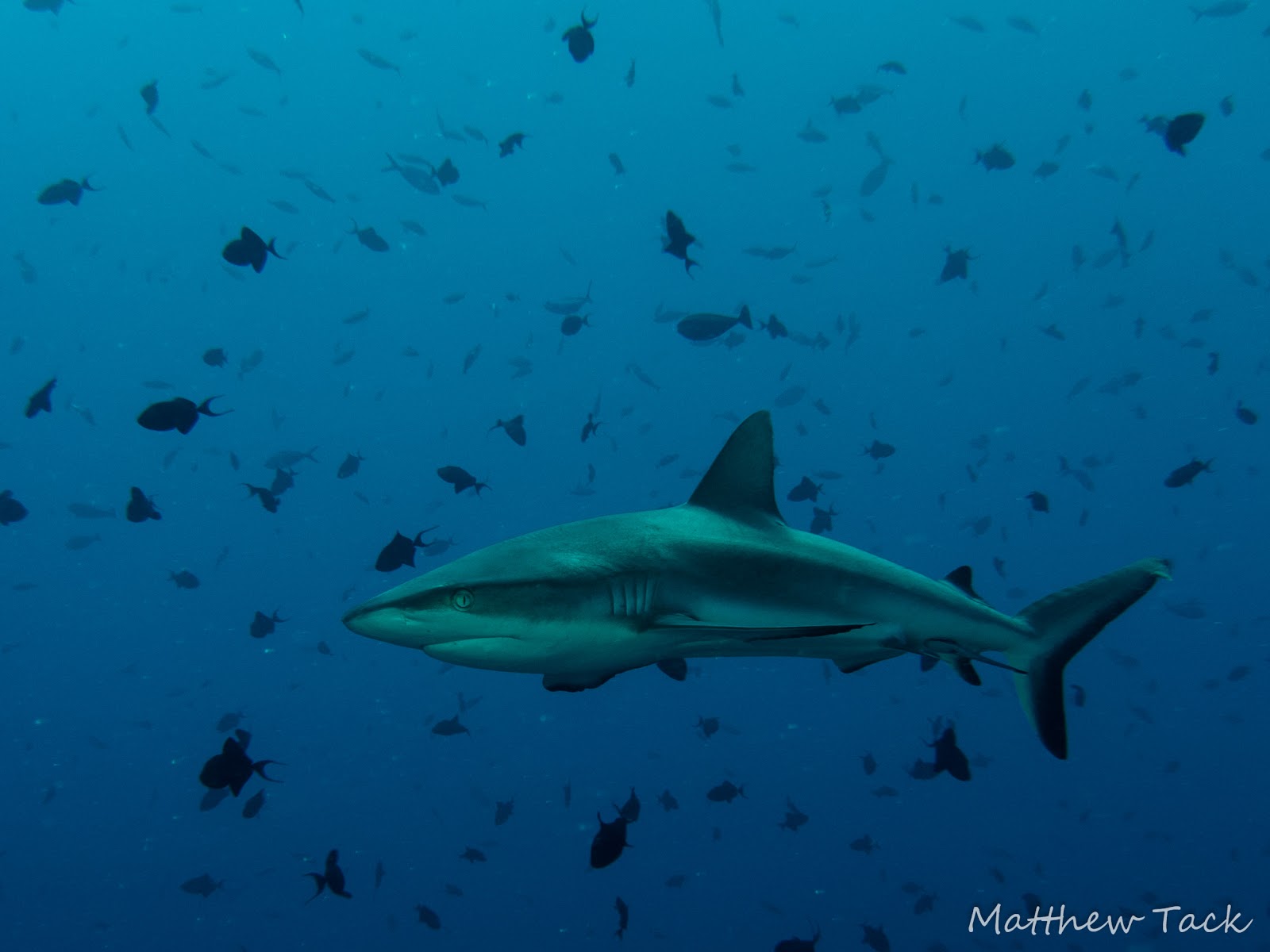
Grey reef shark - they are stocky for a reef shark

Coreen in the Blue Hole cavern

Saturday, 17 November 2012

California dreaming meets Hawaii Five-Oh!

Hey folks,

We are in Micronesia at the moment and have now posted our photos from the past few weeks, but I wanted to give you all a quick skinny on what we have been up to since we last posted.

One of the people we met in Red Rocks was Brian, a legend of a bloke that has done 6 years down in Antartica and now lives on a 36ft Catalina yacht in San Diego.  He offered to take us sailing if we were ever down there, so we did what we normally do, we rolled on down and took him up on his kind offer.  We had a great couple days hanging with him, sailing, chilling out, drinking Green Flash beer and climbing.

A brief side note here on one of my favourite topics: BEER!  Eleven years ago when we were in the USA their beer was not fit to drink.  They were into their Budweiser (the watery kind, not the real Czech kind), Miller Lite (low in calories don't you know) and Coors.  Now, they have woken up to the fact that beer can taste better than water and have a real trend forming of IPA's (India Pale Ales), golden ales, and a whole range of tasty lagers.  It is a complete change from where they were 11 years ago, and one that makes travelling the US a much more pleasant experience!  I can recommend Green Flash, Lagunitas, Kona Brewing Co, Metolius and Mahena but there are so many more.

After this we visited our mates in Venice Beach again, and then cruised up along the coast road to Morro Bay where one of Cor's online friends lives.  Those two just started chatting like they had known each other for years (which I suppose they have) and I was given cause to wonder just how much our world has changed in the last 15 years.  Those that know us wouldn't be surprised to know that Peggy and I got on just as famously, and we swapped names of many sci-fi books and authors over a cracking seafood lunch.

We then went via amazing Hearst Castle (if you ever get a chance, check it out) to Monterey Bay to see the aquarium.  It was fan-fricking-tastic.  So many things to see, and our favourites included the rays, the seahorses and their mola-mola.  Check out the pics on the link to the right for a tiny slice of what it is like.

Next stop, San Francisco, and another friend we met in the Australian outback, the gorgeous Sarah.  Sarah arranged a day out in Napa for us touring some wineries, including one where her friend Zane worked.  This guy was knowledgeable about so much in relation to wine and was a top guy to boot.  We had an amazing day there and leaving after drinks with these guys was so hard, I could definitely hang with them a lot more.

And so after San Fran we flew to Hawaii.  We caught up briefly with our mate James from Costa Rica before he went out for another week of work on the Aggressor, and we did our manta ray night dive.  Only a couple of manta rays and no really close encounters, so fingers are crossed that we see them here in Micronesia.

We hired a convertible in Hawaii (a Camaro) which was fun, and then we added to the fun factor with a helicopter ride over the Big Island.  It was sensational to see the lava flowing red hot down the fields up close and personal, and getting into the valleys to see scores of waterfalls on the wet side of the island was breathtaking.

Another note, in Hawaii cops drive Mustangs, Chargers and Camaros.  They get a stipend to their salary to drive their own cars and the state gives them money for the safety bits and pieces.  It is strange to see a bright orange Charger in the rear view mirror with a cop light on top, real Hawaii 5-0 stuff.

A final thing to add, see the links to the right for our latest pics (I have even updated the Costa Rica ones) and I have now done a video of our climb of Frogland here on Vimeo.  There is one instance of bad language in there towards the end (just a warning for the parents) but check it out anyway.  My first ever video!

Palya!